
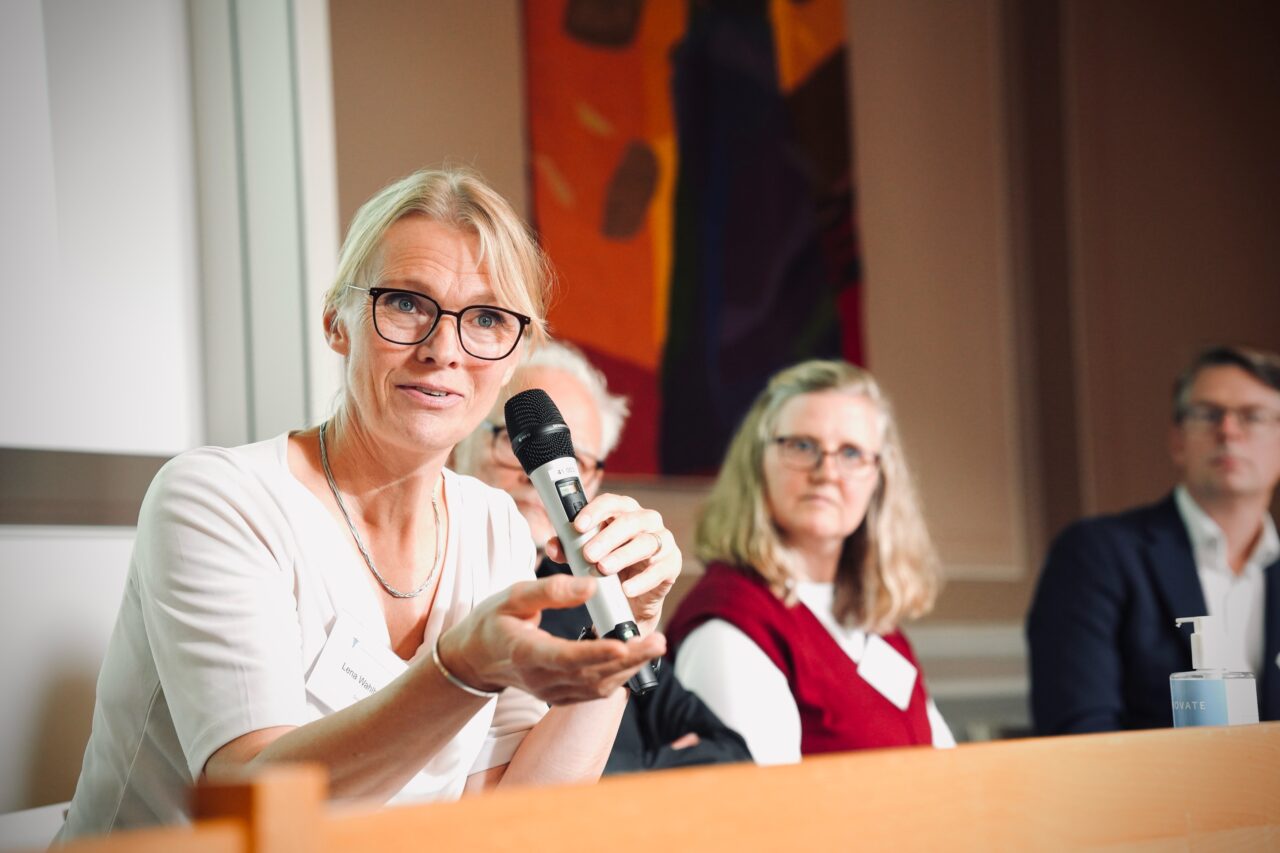
Can artificial wombs challenge the right to abortion?
That was one of the takes in our workshop at the conference of the European Association of Health Law in Uppsala.
During the three day conference of the European Association of Health Law in Uppsala the Swedish National Council on Medical Ethics had the opportunity to contribute to the programme.
In our workshop “The Future of Reproduction: IVG, Artificial Wombs and the Limits of Law” we turned to the future of human reproduction and discussed how in vitro gametogenesis and artificial womb technologies may challenge existing ideas about reproduction, parenthood, autonomy and the limits of law.
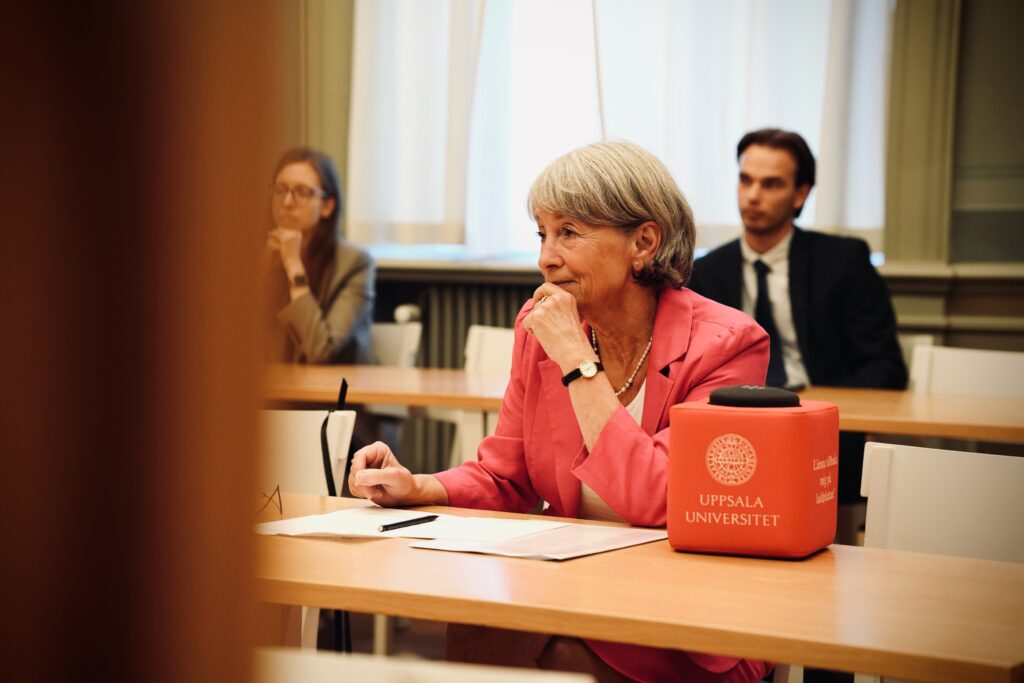
Anna Singer asking questions to the panel.
Reproduction was also the focus on an other workshop charied by Lotta Eriksson, the secretary general of The Swedish National Council on Medical Ethics. At the seminar “Gender, Fertility and Reproductive Autonomy” egg freezing was one of the subjects – with different time limits in European countries and an interesting ruling in Austria that represents a paradigmatic shift.
Surrogacy was also one topic that we dived in to and discussed.
How do surrogacy laws navigate freedom of movement, cross-border jurisdiction, and non-commercialization?
The focus was a case study of France and Greece – the former of which prohibits surrogacy and the latter of which allows it non-commercially – and whether the laws protect individuals from commercialization or if surrogacy falls under the scope of economic freedom.
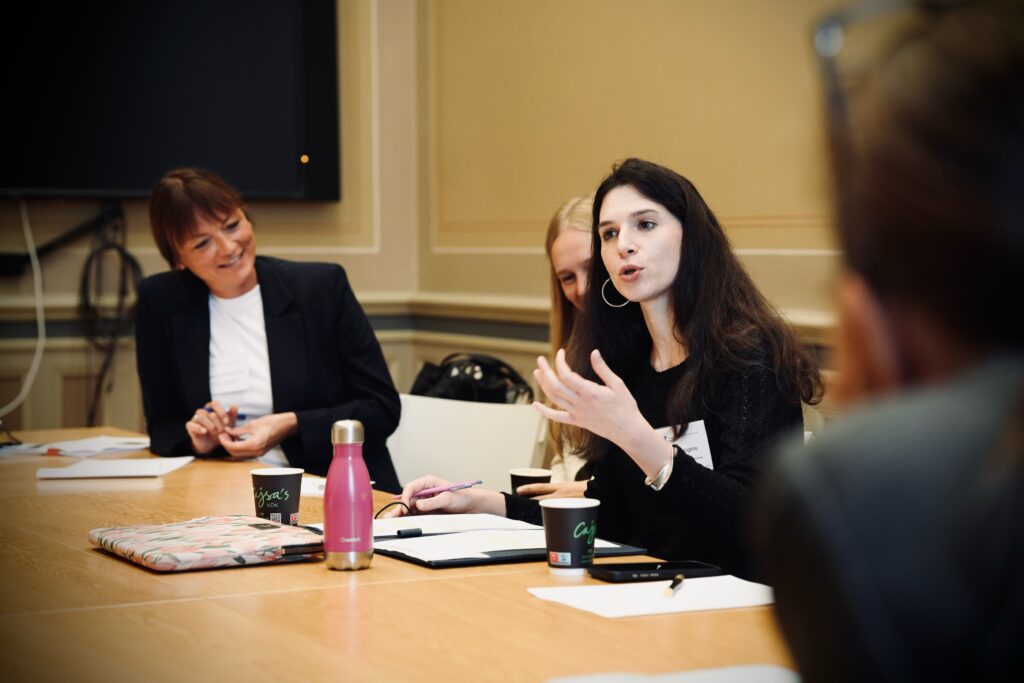
Maria Kalogirou, Postdoctoral Researcher in Health Data Law at Paris 1 Panthéon Sorbonne University.
No brain, no pain, no problem
Bodyoids, organoids and embryo models are challenging some of the categories upon which existing ethical and legal frameworks are built. What should determine how these new entities are treated – their origin, what they resemble, their developmental potential, sentience, or something else? This was the subject for our session “Between Biology and Law: The Moral and Legal Status of Emerging Embryonic and Bodily Entities”.
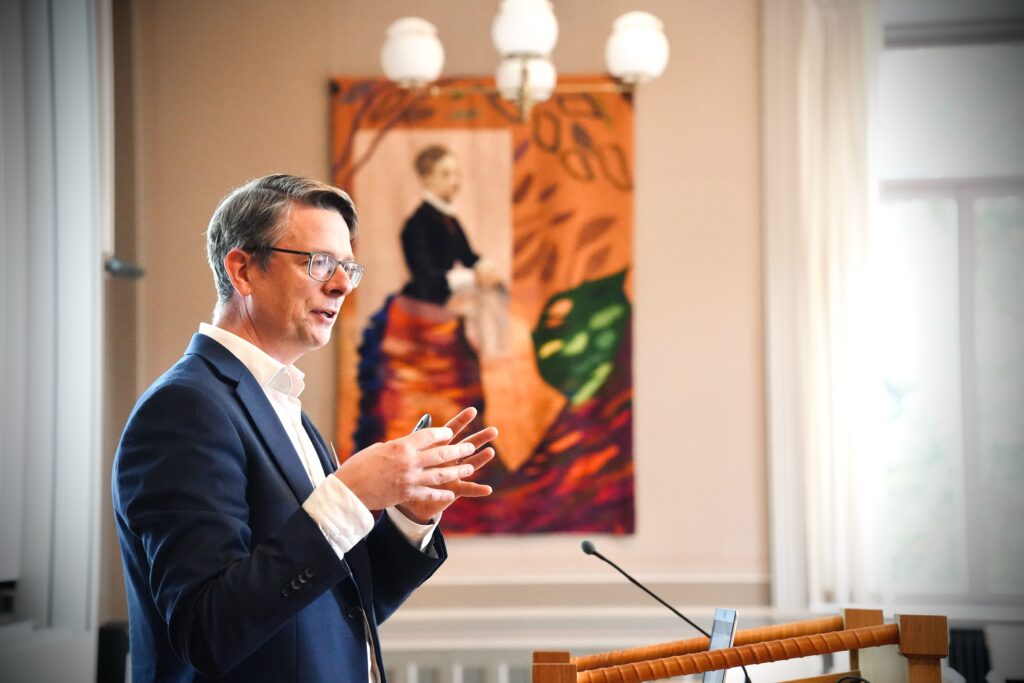
Fredrik Lanner Professor of Embryonic Stem Cell Biology at Karolinska Institutet
The discussions at all sessions showed the value of bringing together perspectives from law, ethics and science.
A big thank you to Lena Wahlberg, Nicola Williams, Andrew Darby, Niklas Juth, Fredrik Lanner, Göran Collste, Tesi Aschan, Sara Fovargue, Magdalena Flatscher-Thöni, Maria Lorenz and Maria Kalogirou. And of course a warm thank you to Santa Slokenberga and Anna Singer and the whole EAHL team for a fantastic conference – and for giving The Swedish National Council on Medical Ethics the opportunity to contribute to the programme.